TEKS 3.2D · Grade 3
Comparing and ordering big numbers
Deciding which of two numbers is larger when both run to the ten thousands, and putting a list of them in order.
The standard itself reads: “3.2D: compare and order whole numbers up to 100,000 and represent comparisons using the symbols >, <, or =”
One of them, worked all the way through
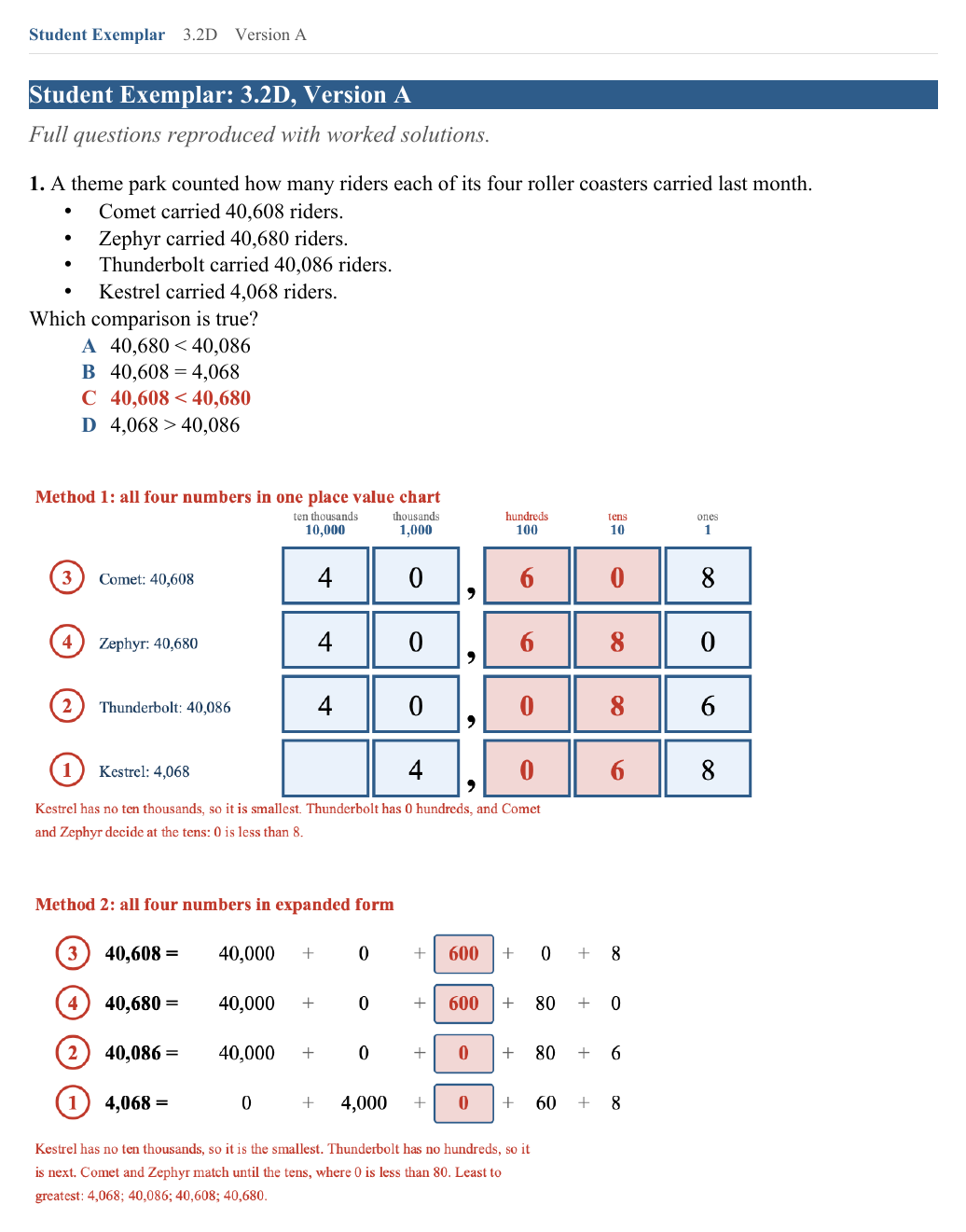
- Count the places before comparing any digits. Kestrel’s 4,068 has four places where the others have five, so it is the smallest here whatever its digits look like.
- Comet and Zephyr both start 4, 0, 6. Read left to right to the first place where they differ: the tens. Comet has 0 tens, Zephyr has 8.
- So 40,608 is less than 40,680. The first place where two numbers differ settles it, and nothing after that can change it.
This is one way, not the only way. The printable shows the same question worked more than one way, because children get there differently.
What usually goes wrong, and what helps
Each of these is a different misunderstanding rather than a slip, so each one needs something different. Find the one that sounds like your kid.
- The student compares the first digits and stops, without checking how many places each number has
- After the first pair matches, ask “what’s the next place?” The first digit only decides it when it is actually different.
- The student calls two numbers equal because they use the same digits, without checking how many places each one has
- Count the places, not the characters on the page. Commas are only spacers. When two numbers have the same number of places, the digits have to settle it.
- The student puts the list in order from least to greatest when the question asked for the other way
- Have them underline the word “greatest” or “least” before they start, then read their finished list back against that word.
- The student compares place by place but starts from the right, the way adding works
- Say it out loud together: adding starts on the right, comparing starts on the left. The biggest place is where the difference counts.
Try this at home
Write two five-digit numbers with the same first digit and ask which is bigger. The answer is decided one place at a time, left to right: the first place where they differ settles it, and nothing after that matters.
What’s in the printable
Four questions on this skill, two to a page. The rest of the file is for the adult: an answer key, a worked solution for every question, and teacher pages on what each wrong answer means.