TEKS 3.4A · Grade 3
Adding and subtracting to 1,000
Two- and three-digit addition and subtraction, including the two-step problems where the answer to the first part feeds the second.
The standard itself reads: “3.4A: solve with fluency one-step and two-step problems involving addition and subtraction within 1,000 using strategies based on place value, properties of operations, and the relationship between addition and subtraction”
This one is free on Teachers Pay Teachers: the whole set, not a preview.
One of them, worked all the way through
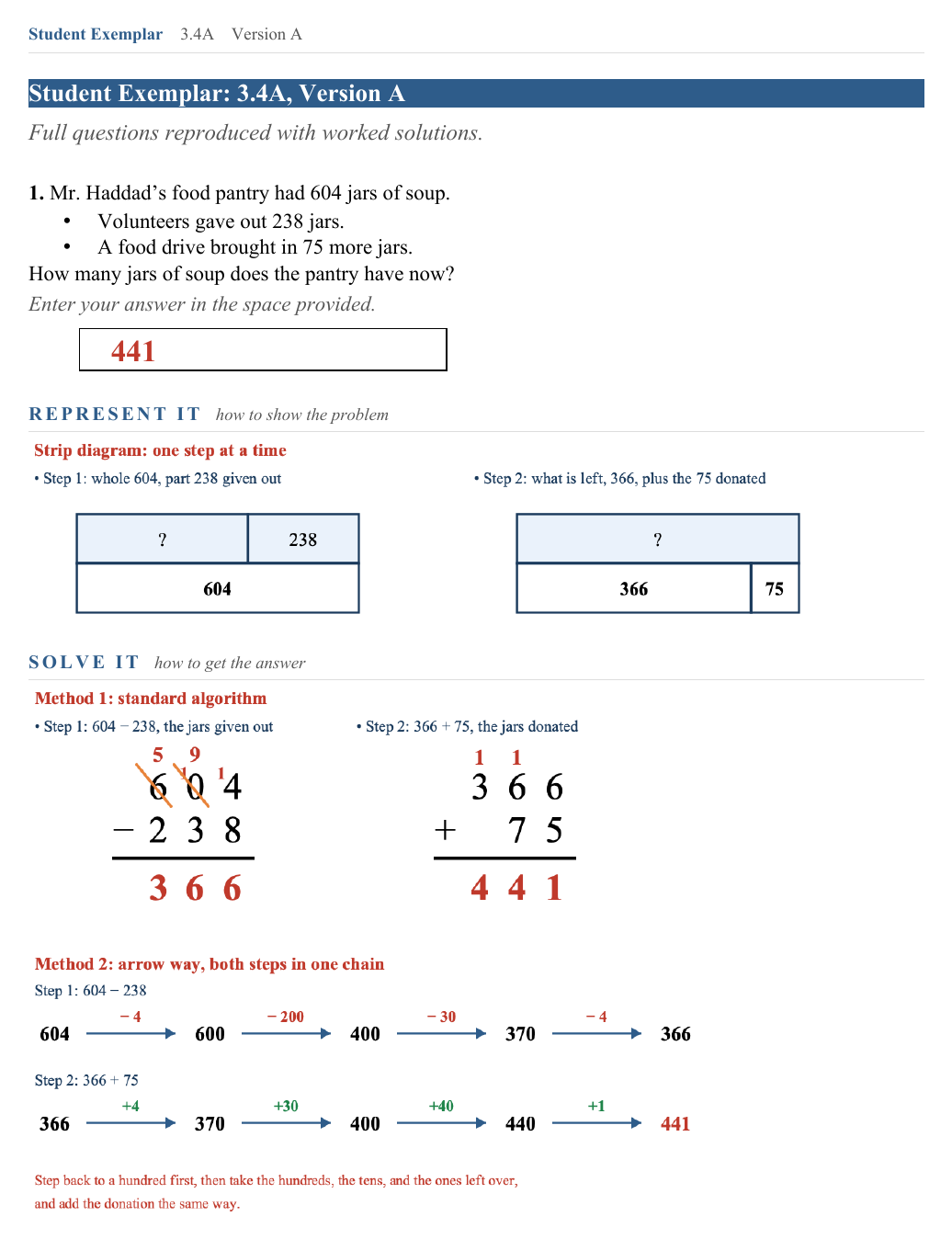
- Two things happen to the jars, so it takes two steps. The jars go out first: 604 − 238.
- The ones ask for 8 from 4, and the tens are empty, so a hundred moves across before a ten can. That leaves 366.
- Then the donation comes in: 366 + 75 = 441. Stopping at 366 answers only half of what was asked.
This is one way, not the only way. The printable shows the same question worked more than one way, because children get there differently.
What usually goes wrong, and what helps
Each of these is a different misunderstanding rather than a slip, so each one needs something different. Find the one that sounds like your kid.
- The student takes the smaller digit from the larger in each column, whichever one is on top
- When the top digit is the smaller one, that column has to borrow. Ask “can you take 8 away from 0?” and let them hear that it cannot be done as written.
- The student borrows a ten but forgets to take it from the column next door
- Every ten borrowed has to leave the column it came from. Point at that column and ask what it is worth now.
- The student answers the first half of a two-step problem and stops there
- After they land on a number, have them read the story again and ask whether anything still has to happen.
- The student adds when the story asks how many MORE, because both numbers are sitting there
- Underline the last few words of the question. “How many more” is a difference, even when both numbers are sitting right there.
Try this at home
Ask for the answer a second way. If they stacked the numbers, ask them to count up instead; if they counted up, ask them to stack it. Two routes to the same number is the strongest check there is.
where these methods come from The strategies behind it: the Addition chart and the Subtraction chart.
What’s in the printable
Four questions on this skill, two to a page. The rest of the file is for the adult: an answer key, a worked solution for every question, and teacher pages on what each wrong answer means.