TEKS 4.3D · Grade 4
Comparing two fractions
Deciding which of two fractions is bigger when the top and bottom numbers are both different.
The standard itself reads: “4.3D: compare two fractions with different numerators and different denominators and represent the comparison using the symbols >, =, or <”
One of them, worked all the way through
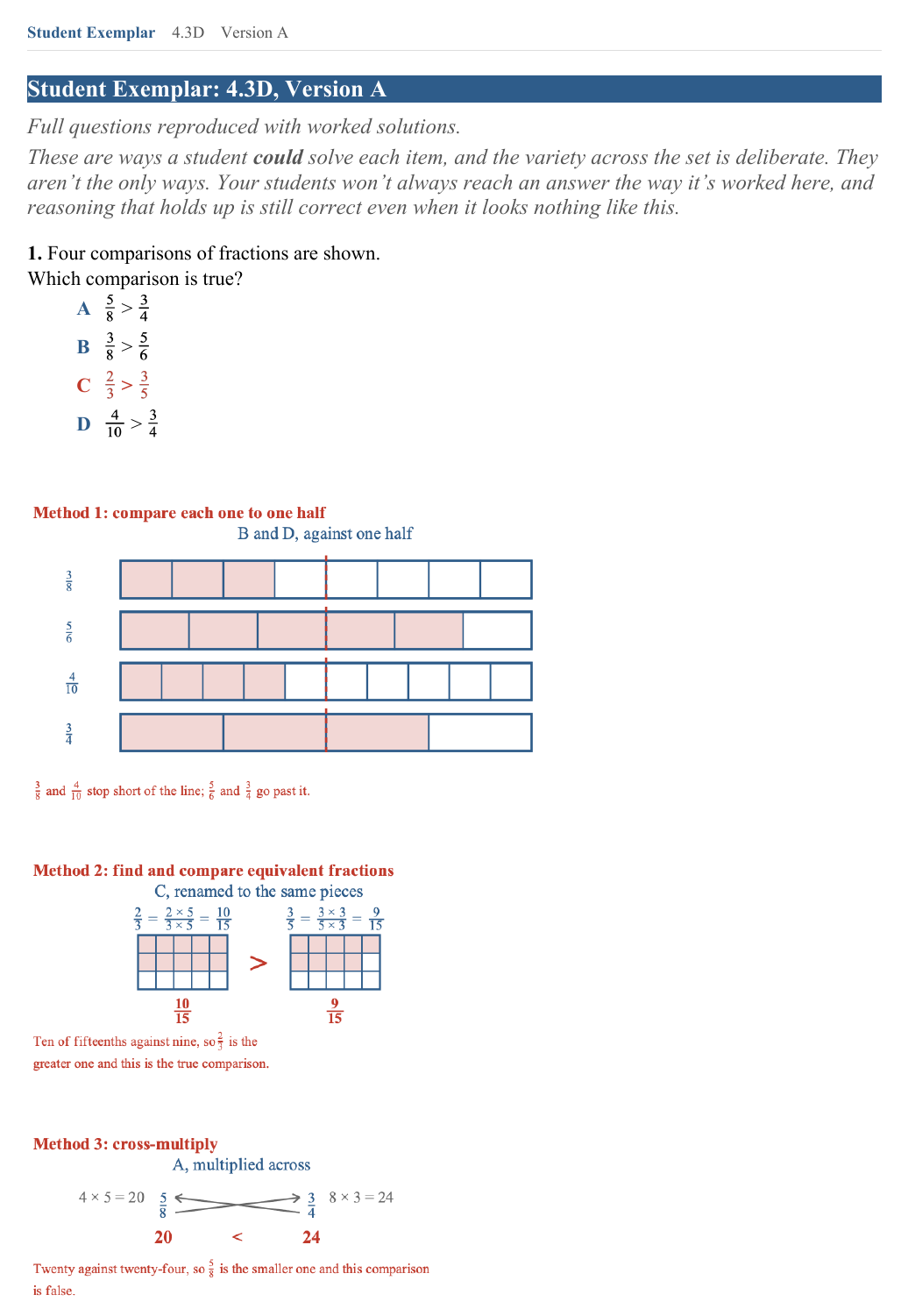
- The pieces are different sizes, so they cannot be counted against each other yet. Cut both into the same size piece.
- Multiply the top and the bottom of each fraction by the other one’s bottom number: 2/3 becomes 10/15, and 3/5 becomes 9/15.
- Now the pieces match and only the count matters. Ten fifteenths against nine, so 2/3 is the bigger one.
This is one way, not the only way. The printable shows the same question worked more than one way, because children get there differently.
What usually goes wrong, and what helps
Each of these is a different misunderstanding rather than a slip, so each one needs something different. Find the one that sounds like your kid.
- The student compares only the bottom numbers, so more pieces looks like more
- More pieces means smaller pieces. Ask how big ONE piece is before counting how many there are.
- The student takes both numbers being bigger to mean the fraction itself is bigger
- 3/5 is written with bigger numbers than 2/3 and it is still the smaller amount. Draw both on the same bar and look.
- The student picks the one with the biggest pieces without counting how many there are
- Big pieces help, but only a few of them may not add up to much. The size and the count both matter.
Try this at home
Ask whether each fraction is more or less than one half before comparing them to each other. That settles most pairs on its own, with no common denominator needed.
where these methods come from The strategies behind it: the Fractions chart and the Fraction strips wall chart.
What’s in the printable
Four questions on this skill, two to a page. The rest of the file is for the adult: an answer key, a worked solution for every question, and teacher pages on what each wrong answer means. 10 pages in all.